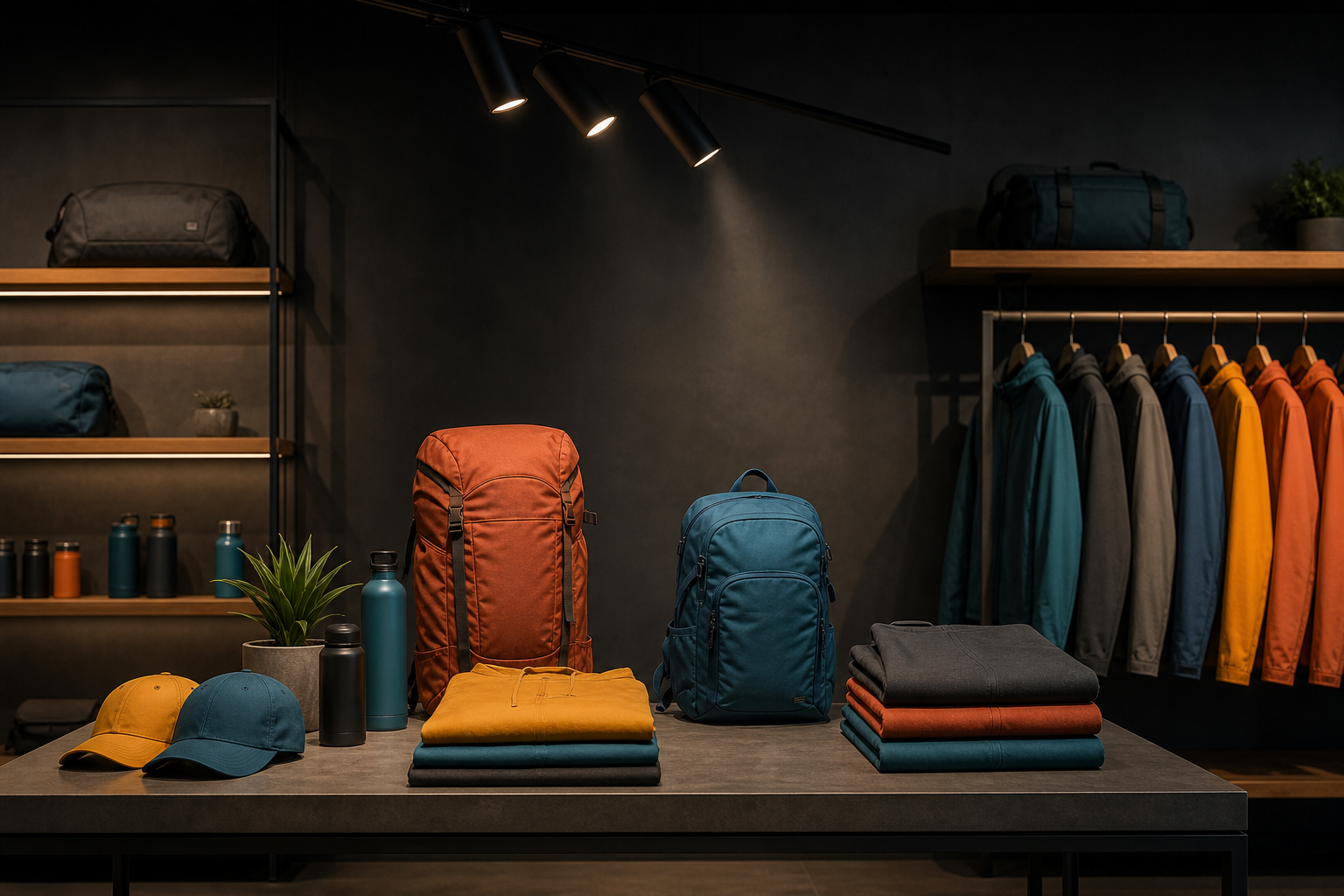
The color rendering index (CRI), often written as Ra, scores how faithfully a light source renders the colors of surfaces compared with a reference source of the same color temperature. The method, defined by the CIE, illuminates a set of eight pastel test colors (R1 to R8) under the source and under the reference, measures the color shifts, and averages the penalties into a single 0-100 number. A source scoring Ra 95 shifts test colors less than one scoring Ra 80. By convention, a reference source — daylight at high CCT, incandescent at warm CCT — scores 100.
Three boundaries keep the number honest. First, CRI says nothing about brightness — it is not lumens, lux or glare. Second, it is tied to color temperature: a 2700K source is compared with an incandescent reference, a 5000K source with daylight, so CRI never compares across CCT lines. Third, and most consequential for buyers, Ra averages only the first eight test colors — all muted pastels, with no saturated red among them. A source can post a respectable Ra while butchering deep reds: tomatoes, meat, wood, brick and, most expensively, human skin.
Test colors R9 to R15 extend the set — R9 is saturated red, R13 approximates skin tone, R14 foliage — and manufacturers report them separately, if asked. The R9 value is where cheap high-Ra claims go to hide. An Ra 80 chip with R9 near zero renders retail merchandise and dinner plates with a grey, dead cast that customers register as "something wrong" long before they can name it. Hospitality and retail programs should therefore specify Ra 90+ with R9 greater than 50 (illustrative, commonly quoted thresholds), and require the R9 line on the test report rather than trusting the headline number. The companion metric worth knowing is IES TM-30, which reports fidelity (Rf) and gamut (Rg) over 99 color samples; it is gradually appearing on better datasheets and is a fair question to put to suppliers.
It helps to picture what weak rendering does at the shelf. Under a low-R9 source, steak looks brown hours before its date, red apparel turns brick, mahogany furniture reads gray — and shoppers register the space as "off" without naming the cause, because the failure is in the merchandise, not the architecture. The same physics works in reverse for galleries and textile showrooms, where Ra 95 sources are specified so the object's own palette dominates the room. Rendering is invisible when it is right and expensive when it is wrong, which is why the number belongs in procurement documents rather than in a designer's promise.
TM-30, the IES method, reports two headline curves rather than one average: Rf (fidelity, how closely colors match the reference, on a 0-100 scale comparable in spirit to Ra) and Rg (gamut, whether colors are rendered more saturated above 100 or muted below it). Two sources at the same Rf can read entirely differently because of Rg — one renders merchandise vivid and punchy, the other soft and natural — which is exactly the nuance a single Ra number erases. For buyers, the working advice is simple: keep CRI/Ra as the contract language because specifications and tenders still use it, but ask for the TM-30 report when the decision is between two premium sources, and let Rg decide whether the program wants vibrancy or fidelity.
| CRI tier | Typical cost posture | Best suited to | Practical note |
|---|---|---|---|
| Ra 70-80 | Entry, highest efficacy | Warehouses, parking, transit, back-of-house | Fine where color judgment is not the task |
| Ra 80+ | Commercial default | Offices, corridors, schools, general retail | Specify R9 where people and produce appear |
| Ra 90+ | Premium, lower lm/W | High-end retail, hospitality, galleries, grocery | Ask for R9 and TM-30 data, not just Ra |
| Ra 95+ | Specialist | Color-critical inspection, studios, museums | Shorter lists, longer lead times, verify per batch |
Tiers are illustrative market practice. High CRI typically trades against luminous efficacy — a Ra 90 source delivers fewer lumens per watt than the same chip at Ra 80 — which is why CRI should be specified per area, not per building.
Specify CRI by task and by what the light falls on, not by blanket upgrade. Warehouses and parking garages waste money at Ra 90; grocery produce walls and hotel restaurants waste product at Ra 80 without R9. The mechanism is easiest to see in the scenes where it earns its keep: meat and produce counters in our supermarket guide, skin tones and fabrics in retail stores, plating and wood in restaurants, and paint under showroom light in the car dealership guide. A useful cross-check with CCT: CRI interacts with warmth — a 2700K Ra 90 source renders wood and skin differently than a 4000K Ra 90 source — so the two parameters should be approved together on one sample, under mixed light, as described in our color temperature guide. Where the whole program is hospitality, the tier logic by space type is laid out in our hotel lighting solution.
CRI is a datasheet number until it is a contractual one. On the purchase order: state Ra, R9 and CCT with SDCM window as one specification line; require the LED package's test report naming those values; lock the bin at sample approval and record bin codes per batch in inspection reports. Certification by destination (CE, UKCA, SAA, SASO) is issued via certified partner factories and verifiable by number and database link — the compliance matrix sits in our certification guide. Note that high-CRI product lines usually carry slightly lower efficacy and a modest price premium; quotations that match Ra 80 pricing at Ra 90 claims deserve a bench test before belief.
Illustrative commercial terms: samples of 1-5 pcs ship in 7-14 days; trial orders run 100-200 pcs per SKU; bulk production 25-40 days after deposit; pricing quoted per project. Pre-shipment inspection for CRI-critical orders should include a lit comparison against the golden sample on real merchandise or materials — swatches of skin-tone fabric, red produce, wood — which catches bin drift that instrument sheets summarize away.
The trade-offs behind the premium are worth stating so they can be priced rather than discovered. Higher CRI phosphor schemes absorb more light: a Ra 90 version of a fixture typically delivers on the order of 5-15 percent fewer lumens per watt than its Ra 80 sibling — illustrative, but consistent enough to plan for — which nudges fixture counts up in the same layout. Component availability moves too: high-CRI packages come from a shorter list of chip suppliers, so lead times lengthen and shortage substitutions are more likely; the bin and package lock-in described above exists precisely for this. Neither trade-off argues against Ra 90 in the spaces that sell with light — it argues for specifying it only there, and for writing the expectation into the order instead of assuming it survives contact with production planning.
Dining zones, dimming and CRI — where rendering earns its premium at the table.
Accent ratios and vertical illuminance — how rendering and contrast sell merchandise.
Choosing warm white for hospitality — and why CCT and CRI are approved together.
CE, UKCA, SAA, SASO and DLC by destination market — what your order actually requires.
Ra, R9 and SDCM stated per batch, verified at pre-shipment inspection — samples within 7-14 days.