2026-09-25 · 6 min read · Materials
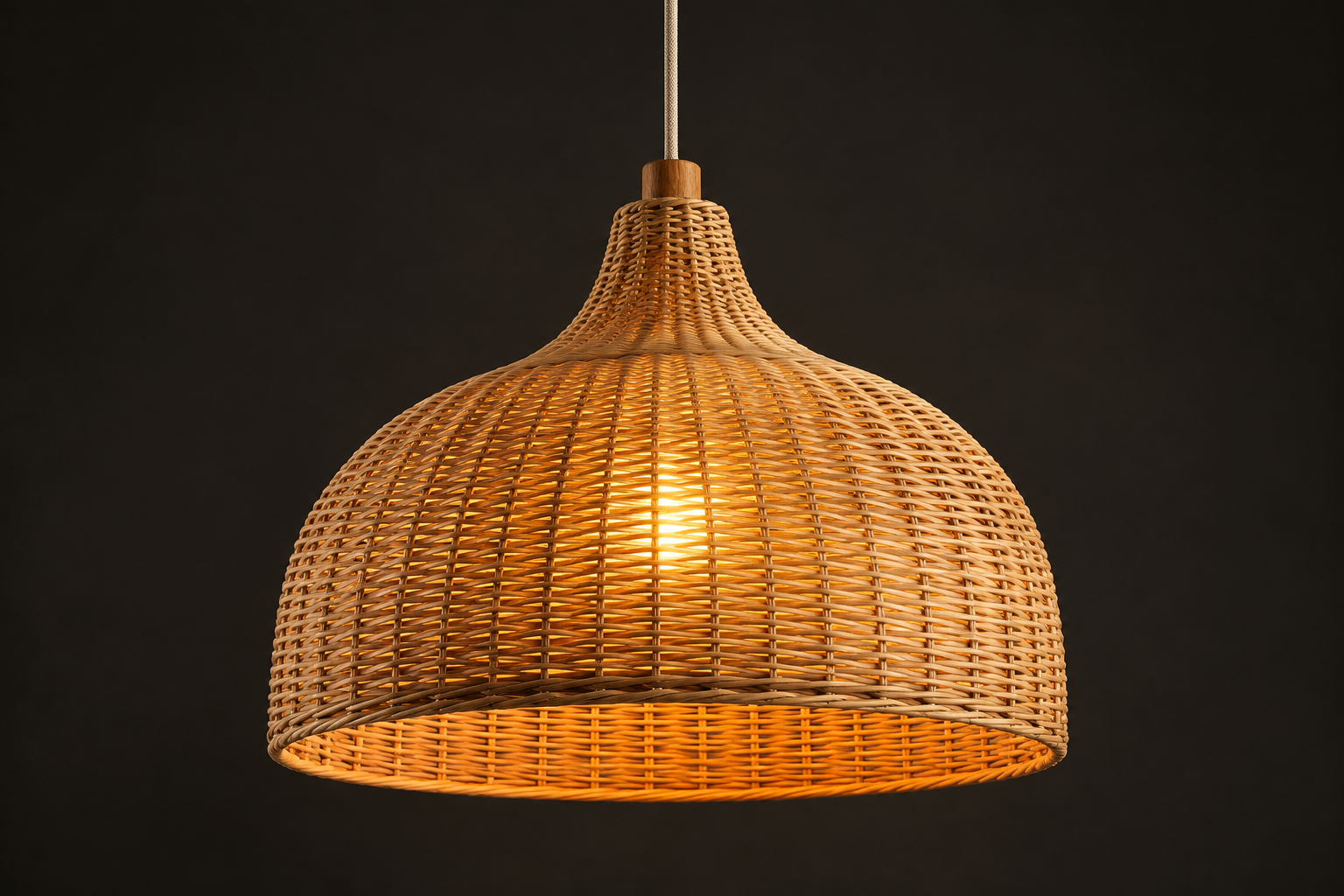
Natural-material pendants have gone from bohemian signature to mainstream default, and the reason is physical before it is fashionable. A woven shade does something no metal or glass fixture can: it patterns the light. The weave throws rhythm onto ceilings and walls, softens the source without dimming the room, and adds the one quality flat-painted interiors lack — texture that responds to the light switch. This guide compares the material families, explains how each behaves as a lampshade, and covers the care rules that decide whether a fiber shade ages gracefully or sad.
Why natural materials took over
The trend names differ — organic modern, japandi, coastal, wabi-sabi — but the underlying move is the same: interiors spent a decade getting cooler and smoother, and natural-fiber lighting is the corrective. The philosophical cousin of the movement, restraint and imperfection included, is explored in our wabi-sabi lighting trend piece. Practically, woven pendants work because they negotiate between opposites: organic texture that suits minimalist rooms, handcraft character at mass-market prices, and a silhouette that reads soft against the hard rectangles of contemporary architecture. They also photograph exceptionally well — the shadow play is the picture — which has accelerated the trend through every design feed.
The material families and how each behaves
Natural pendants come in six recurring families, each with its own light signature. Rattan and wicker — the pliant core of the rattan palm woven over a frame — give the classic airy weave and the widest shape range, from shallow drums to generous spheres. Bamboo woven in flat strips reads finer and more rhythmic, with a slightly cooler cast. Wood slats and veneers, bent into drums and domes, throw linear shadow lines rather than weave patterns. Cane webbing brings the mid-century chair pattern overhead. Seagrass and jute are the coarse, matte end — texture first, light pattern second. Paper and linen shades behave almost like diffusers, glowing evenly rather than patterning. Hand-weaving time is the main cost driver, so price tracks weave density and size more than material exoticism (illustrative).
| Material | Character | Light effect | Suits | Care level |
|---|---|---|---|---|
| Rattan / wicker | Airy weave, warm tan | Strong patterned shadows; dappled | Living, dining, bedrooms, entry | Low — dusting |
| Bamboo | Fine strips, rhythmic | Linear texture, medium diffusion | Japandi, casual modern | Low |
| Wood slats / veneer | Architectural, grained | Directional lines; moody | Dining, offices with warmth | Low |
| Cane webbing | Mid-century grid | Semi-patterned, soft | Retro and modern mixes | Low |
| Seagrass / jute | Coarse, matte, chunky | Heavily diffused, gentle | Coastal, boho, casual | Low — sheds initially |
| Paper / linen | Soft sculptural glow | Even diffusion, no pattern | Bedside, reading, quiet rooms | Medium — keep dry |
Illustrative groupings of common trade practice; individual products vary with weave density and finish.
How woven shades shape light
The weave is the optics. An open, loose weave passes visible points of light and throws the bold shadow patterns the category is loved for; a dense weave closes toward full diffusion and trades drama for softness. Either way, fiber shades consume light — expect a woven pendant to deliver noticeably less illuminance than a metal or glass fixture of the same lamp, which matters most over work surfaces. The fixes are simple: size up, add fixtures, or specify a higher-lumen LED inside. Where the lamp is visible through the weave — which it usually is — an opal inner diffuser or a milky globe lamp kills the hotspot without losing the pattern, and a warm 2700 K source amplifies the honey tones of the fiber. CRI 90 or better keeps timber floors and linen sofas reading true under what is, effectively, a light filter made of the same palette.
Where they fit — and where they do not
Natural pendants anchor living rooms, dining rooms, bedrooms, entries and stairwells — anywhere the fixture is seen at rest and the room wants warmth. Over a kitchen island they work, with one operational caveat: grease and steam from heavy cooking slowly load a fiber shade that cannot be washed, so islands with serious wok-and-fry duty should either pick a metal-glass hybrid or accept a shorter cosmetic life. The rooms to refuse are the wet ones: full bathrooms and any exterior position are no-go zones for raw fiber — humidity cycles crack and cloud it, and rain destroys it. Where moisture is the theme, the specification moves to sealed materials, as laid out in our bathroom pendant guide. Strong south-facing sun will bleach fiber over years; a dimmer and sensible placement slow that more than any coating.
Care and longevity
Fiber shades ask for almost nothing, done regularly. Dust with a soft brush or the low setting of a vacuum with a bristle head, monthly in practice; spot-clean spills with a barely damp cloth and dry immediately; never soak, never machine. Keep the lamp LED — cool-running by design — because a hot incandescent in an enclosed fiber shade is the one genuinely bad pairing in this category. Check the inner frame on hardwired installs: quality pieces carry a metal or rigid frame under the weave, and the frame, not the fiber, is what the ceiling box supports. Expect cheap fiber to crack under big humidity swings and quality weave to hold for many years (illustrative quality point — the difference is frame and cure, visible on inspection). In hardwired form, the fixture families appear across our chandeliers and pendants range and the wider pendant lights collection; plug-in versions of the same shades suit rentals, as covered in our plug-in pendant guide.
Styling natural pendants with the rest of the scheme
The styling rule that keeps woven shades looking considered rather than themed: one loud texture per room. A sculptural rattan sphere carries a quiet minimalist room; five fiber fixtures of different weaves make a shop display. Pair with the metals already in the room — woven tan sits warmer beside blackened steel and warmer still beside brass, a finish decision compared in our brass vs black guide — and let wood tones in furniture repeat the fixture's palette at larger scale. In open plans, repeat the weave once (a pair over the island, one over the table) rather than everywhere, and let the pattern do the decorating.