2026-09-29 · 7 min read · Buyer's guide
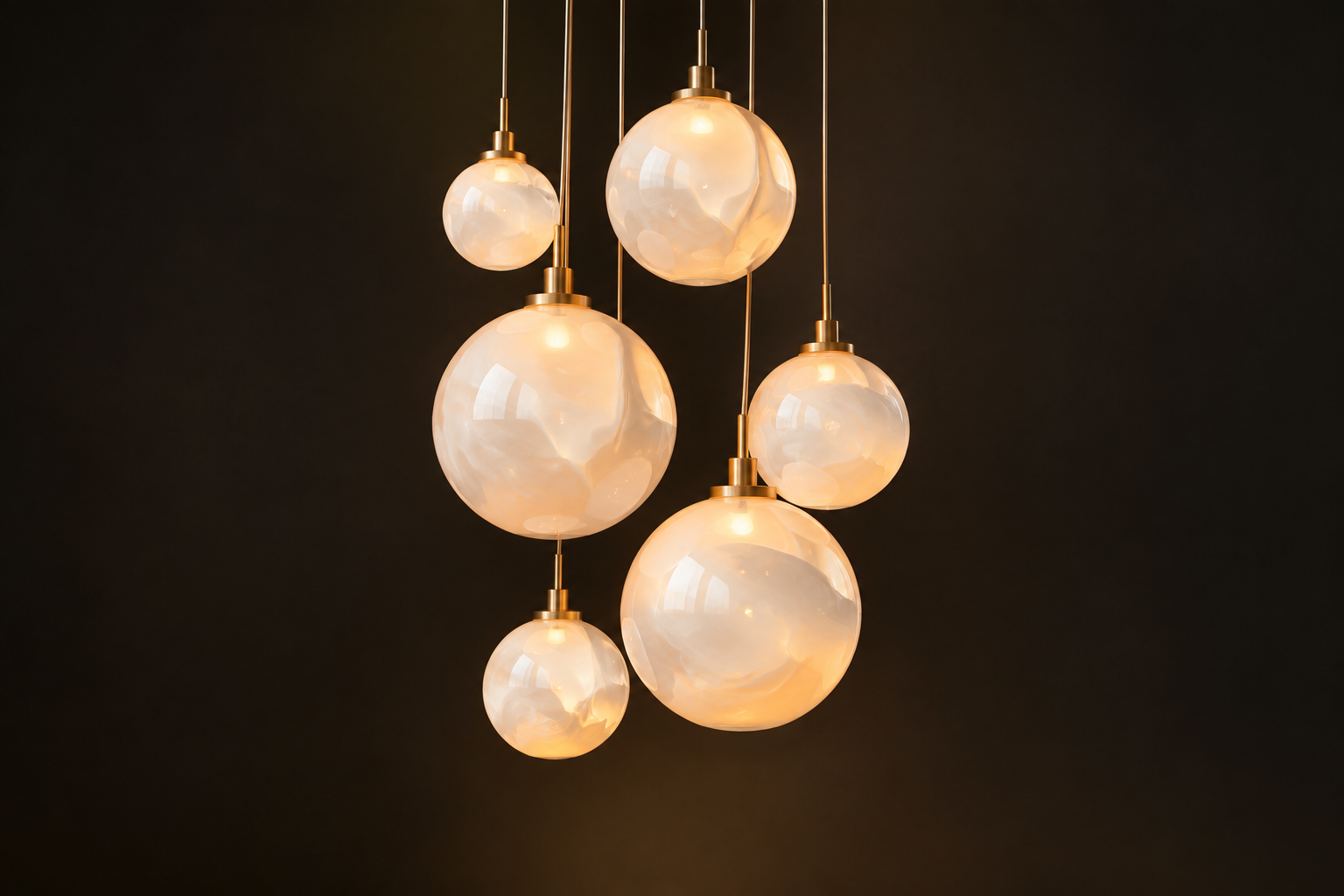
A plug-in pendant delivers the most photogenic fixture category in lighting — a hanging shade, a visible cord, a pool of focused light — without touching the ceiling wiring. The cord simply drops from a ceiling hook, runs along or across the ceiling to the wall, and plugs into a standard outlet. For renters, first apartments, dorm rooms and anyone refreshing a room in an afternoon, it is the cheapest possible route to real pendant lighting. It is also a real product category with real trade-offs: cord management, weight limits and dimming all work differently than they do with hardwired fixtures. This guide walks through what to check before buying.
What a plug-in pendant actually is
The anatomy is simple: a shade and socket, a cord that ends in a molded plug, and usually an inline switch or inline dimmer on the cord within arm's reach. Instead of a canopy wired into a ceiling box, the pendant hangs from a swag hook — a screw-in ceiling hook anchored into a joist or a rated fixing — and the cord travels from the hook to a wall outlet, often draped through a cord cover or dressed along the ceiling line. Installation time is measured in minutes, needs no electrical work, and reverses completely: patch two small holes and the room is exactly as it was.
Two variants are worth distinguishing. A direct-drop plug-in pendant hangs straight down from the hook above its position, like a hardwired fixture in the same spot. A swag pendant offsets the hook from the drop point, so the cord angles across the ceiling — useful when a joist or an outlet position forces the hook away from where the light should fall, and a look in its own right in casual and industrial interiors.
Who they suit: rentals, first flats and fast refreshes
The natural buyers are renting households who cannot open a ceiling, homeowners with a room whose ceiling box is missing or badly placed, and anyone who wants pendant light over a corner — a reading chair, a bedside, a desk — where no fixture was ever installed. Because the fixture leaves with you, a good plug-in pendant is furniture rather than construction: it moves house, gets re-hung, and never argues with a deposit. Hosts and small café operators use the same trick in leased premises where signage and ceiling permissions are limited.
The honest limits: the look includes the cord, so minimal interiors that hate visual clutter will notice it; output is limited to what a single cord and lamp deliver, so a plug-in pendant is ambient or accent light, never a whole-room workhorse; and over a kitchen island the height and spacing rules still apply even though the wiring does not — the proportions in our pendant height over a kitchen island guide are identical for plug-in fixtures.
Installation: hooks, cord runs and the length question
Everything about the install hangs off one fixing. A swag hook should reach solid material — a ceiling joist, a beam, or a rated expansion anchor in concrete; a plastic sleeve in drywall alone is not enough for anything beyond the lightest shades. Position the hook exactly where the pendant should hang, then measure the cord run before buying: drop height, plus horizontal distance to the outlet, plus 30-45 cm of slack for the drape at the hook and the switch position. Most cords ship at 3.6-4.5 m (12-15 ft), which covers a typical bedroom or living-room corner; very tall rooms or distant outlets need an extension cord chosen deliberately — heavy-duty, run along walls, never under rugs.
Cord management is where cheap installs look cheap. Fabric-braided cords are part of the aesthetic and read as intentional; clear cord covers or paintable channels tame the wall run; and the cord should never cross a walkway at head height or drape where a door can catch it. In bedrooms, keep the outlet side away from curtains, and use LED lamps so a shade resting near fabric never sees real heat.
Dimming and switching
Plug-in pendants dim through one of two routes. The first is an inline dimmer built into the cord — buy the version that includes one, and pair it with a dimmable lamp, because a non-dimmable LED will flicker or buzz. The second is a smart dimmable lamp inside any plug-in pendant, controlled by app or voice; the wall switch or inline rocker then just supplies power at full. Hardwired-style wall dimmers do not apply unless the outlet itself is switch-controlled, which is common in some living rooms — worth checking before assuming the lamp has to be reached by hand. For bedside and reading positions, a warm 2700 K lamp dimming to low levels is usually the whole point of the fixture; our 2700 K vs 3000 K comparison covers the warmth choice.
Plug-in vs hardwired at a glance
| Dimension | Plug-in pendant | Hardwired pendant |
|---|---|---|
| Installation | Minutes, no electrician, screw-in hook | Licensed install into a ceiling box |
| Reversibility | Total — patch two holes | Permanent; box and wiring stay |
| Cost beyond fixture | Hook and cord cover only | Electrician visit, possible box relocation |
| Weight ceiling | Light shades only — hook rating governs (commonly a few kg, illustrative) | Box-rated; heavy glass and multi-light pieces fine |
| Dimming | Inline dimmer or smart lamp | Wall dimmer matched to driver |
| Visual character | Cord visible; casual, industrial, renter-friendly | Clean canopy; formal and seamless |
| Best for | Rentals, corners, quick refreshes, leased premises | Forever homes, islands, statement fixtures |
Weight, safety and where to hang
Plug-in pendants reward light materials: rattan and woven fiber, slim metal domes, fabric drums and paper shades all sit comfortably within a hook's practical rating, while heavy glass and crystal belong on a wired box. Check the hook's stated load rating and the anchor behind it as one system, not just the number on the packet. Keep the lamp LED for cool running, and treat hanging height exactly as you would for a wired fixture — the same 76-91 cm rule over surfaces, the same clearance over walkways.
On placement, plug-in pendants earn their keep in exactly the spots hardwiring rarely reaches: over a bedside table with the bottom of the shade roughly 50-70 cm above the surface (illustrative), over a reading corner, over a home-office desk. Materials matter for the look as much as the mechanism — woven and natural finishes are covered in our rattan, wood and natural material pendants guide, and the broader pendant lights and chandeliers and pendants ranges show the same shade families in hardwired form.
When to hardwire anyway
Three situations push past the plug. Over a kitchen island, where the pendant row is the kitchen's centerpiece and cords across the ceiling would fight the clean lines the fixture is meant to create, hardwiring wins. Where dimming scenes across several fixtures matter, wired circuits with matched drivers do what a cord full of smart lamps cannot quite. And anywhere the fixture exceeds a hook's sane rating — multi-light pieces, heavy glass, anything over a few kilograms — the ceiling box is the only right answer. Between those cases, the plug-in route is not a compromise to apologize for; it is the correct tool, and the fastest one.