2026-09-27 · 6 min read · Zone guide
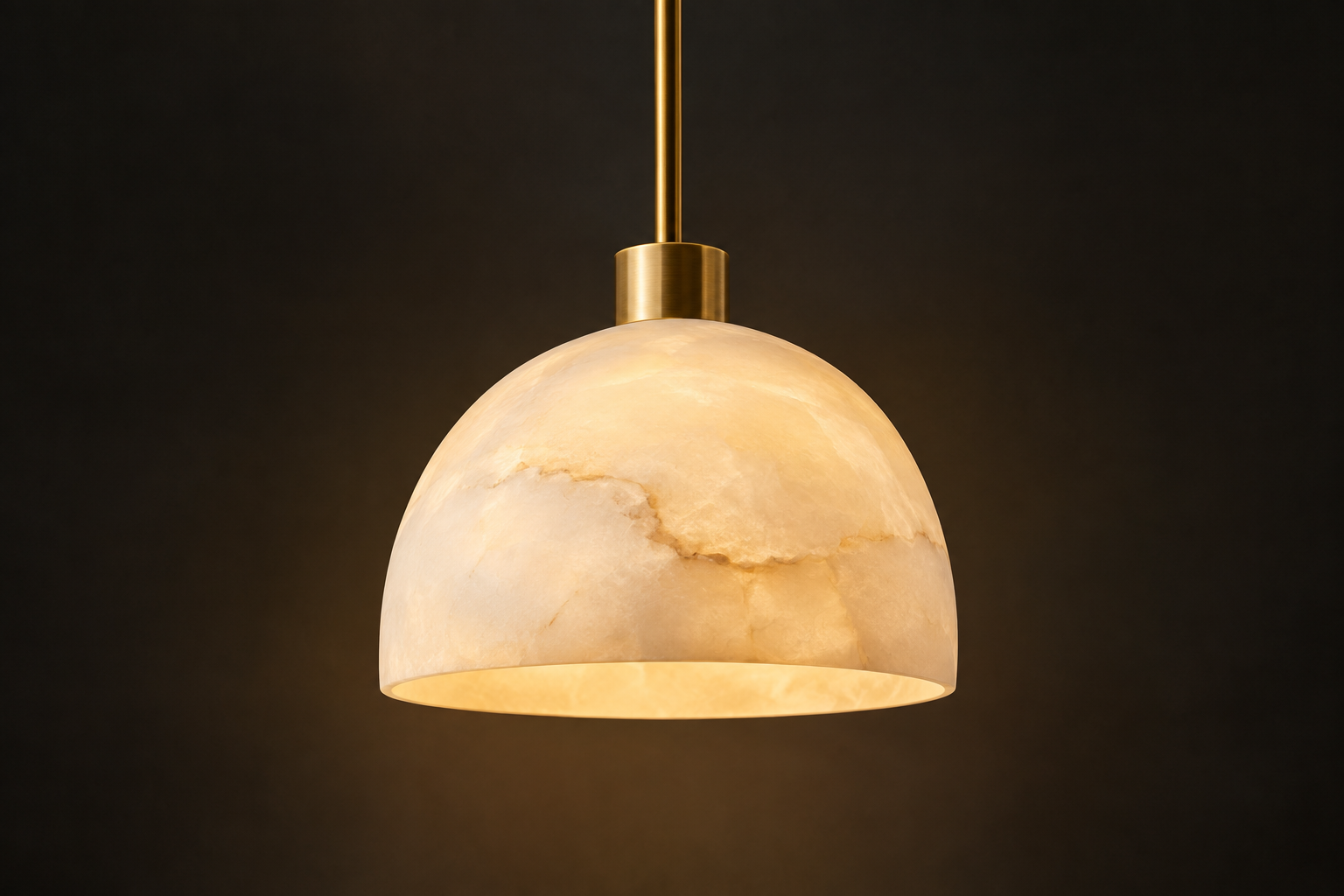
The bathroom is the room where pendant lighting most often gets argued about — usually because the argument skips the only question that matters: where in the bathroom. A pendant over a powder-room basin is a routine decorative choice; a pendant inside a shower enclosure is a code violation and a hazard. Between those poles sits a small set of locations — the vanity, the tub corner, the dressing nook — where pendants work beautifully provided the fixture's moisture rating, hang height and materials match the zone. This guide sorts the locations, then the specification.
Where pendants earn their place
Powder rooms are the easiest case and the most common win. No bath or shower means no zone restrictions in practice: any well-made indoor pendant works, and a single sculptural piece centered between sconces — or alone — turns the smallest room in the house into the one guests remember. The vanity wall is the second home: one pendant centered over a single wide mirror, or a pair flanking a smaller one, softens the mirror-and-downlight clinical look and adds the only vertical element the room has.
Above a freestanding tub, in baths with real ceiling height, a pendant supplies the centerpiece that a flush disc never could — provided the fixture stays clear of the tub's zone volumes, which the next section defines. Finally, dressing niches and water-closet compartments inside larger bathrooms take pendants as pure decoration, far from any spray zone. What none of these locations tolerate is a decorative fixture crowding a low ceiling: below roughly 2.4 m of height, a flush or semi-flush ceiling light is the honest answer.
Moisture zones, in plain terms
International practice divides the bathroom into zones by proximity to water, in the pattern set by IEC 60364-7-701: zone 0 is inside the basin or shower tray itself, zone 1 is the volume directly above it up to about 2.25 m, and zone 2 extends roughly 60 cm beyond zone 1's edges. The further into the water, the higher the ingress protection the fixture needs; outside the zones, ordinary indoor rules apply, with a damp-tolerant fixture preferred wherever steam accumulates. North American practice phrases the same idea as damp-location and wet-location listings with horizontal-and-vertical distances around tubs and showers instead of named zones. Local code wins every argument — the table is orientation, not authorization.
| Location | What to look for | Pendant verdict |
|---|---|---|
| Powder room (no bath/shower) | Standard indoor fixture; ventilate normally | Yes — decorative choice is free |
| Vanity wall, outside tub/shower zones | Damp-rated fixture preferred; sealed shade | Yes — the classic spot |
| Within tub/shower zone volumes | Dedicated wet-zone-rated fittings per local code | Avoid decorative pendants; use rated fittings |
| Enclosed shower | Wet-rated, enclosed luminaires only | No — dedicated fixtures only |
| Above a freestanding tub, outside zones | Damp-rated; height per local rule | Yes, where ceiling height and code allow |
Qualitative summary of common practice; ratings and distances differ between IEC-style and NEC-style regimes. The IP language behind the ratings is explained in our IP rating guide. Always follow the local code and the product's own listing.
Hang height and scale at the vanity
A vanity pendant lives or dies on sightlines. The bottom of the shade should sit above eye level — roughly 190-200 cm from the floor in practice (illustrative) — so it clears both the mirror's field of view and the tallest user's head, while staying close enough to flatter faces with light from above the mirror line. Scale it to the mirror rather than the room: a single pendant over a 120 cm mirror wants a 20-30 cm shade; the pair-over-two-mirrors layout wants smaller shades with the mirror edge as the spacer. Over a freestanding tub, common practice keeps the fixture outside the zone volumes or at whatever height the local rule sets above the rim — check before falling for a piece, because retro-fixing a zone problem means re-hanging the ceiling.
Materials and light that survive steam
Steam is the real antagonist: it cycles daily, condenses on everything, and finds every unsealed edge. The materials that shrug it off are sealed glass — opal, clear, or stone-look like the alabaster pieces in our alabaster trend guide — and properly finished metals: plated brass, aged brass, powder-coated aluminum. The materials to keep out of full bathrooms are the porous and the organic: raw wood, woven rattan, paper and unsealed stone absorb moisture, cloud up and delaminate; where those textures belong, and why they shine elsewhere, is the subject of our natural material pendants guide.
On the electrical side, integrated LED modules suit bathrooms better than exposed lamp sockets — fewer openings for condensation, no user lamp changes in a humid room. Run light at 2700-3000 K for the evening bath hour, CRI 90+ for grooming accuracy, and put the vanity circuit on a dimmer so the overnight trip to the mirror does not require full daylight.
The specification checklist
Before ordering, tick the short list: rating matches the zone (standard, damp or wet, per the table above); shade sealed or enclosed anywhere steam reaches; integrated LED or enclosed socket; height clears mirror sightlines and code distances; scale checked against the mirror, not the room; dimmer and driver matched; and the ventilation reality acknowledged — a fan that never runs defeats every fixture rating on the wall. Fixture families that tick these boxes sit across our pendant lights and chandeliers and pendants ranges in sealed glass and finished-metal executions.
Send the bathroom type — powder room, vanity wall or tub corner — with ceiling height and the mirror dimensions, and we will return rated, scaled pendant options with FOB pricing within 24 hours.