2026-09-26 · 6 min read · Outdoor guide
The covered transition spaces of a house — the entry porch, the loggia, the porte-cochère — are where indoor and outdoor lighting rules meet, and where a pendant does its best exterior work. Hung under a solid roof, a pendant gives the approach a focal point that wall sconces flanking the door cannot: it fills the volume, marks the threshold, and reads from the street as the house's single piece of jewelry. The discipline is in the details that rain and wind punish — the moisture rating, the mounting, the material — and in getting the scale right for the door below.
Where outdoor pendants work — and where they do not
Pendants belong wherever a solid roof stands between the fixture and open sky: covered front entries, porch ceilings, porte-cochères, verandas, gazebos, covered balconies and the inner bays of deep loggias. In these spots the fixture enjoys the same rain-shadow advantage as an indoor ceiling, and the design freedom is nearly indoor too — lanterns, domes, drums and even fabric-look diffusers built for exterior use.
What they do not tolerate is direct sky. An open eave, a pergola with slatted cover, or any position where wind-driven rain reaches the fixture is not pendant territory: that job goes to wet-location wall packs, downlights or sconces. A slatted pergola under a pendant is the classic misread — the gap coverage protects nothing in a blowing rain, and the fixture's listing, not the roof felt, decides whether the install is defensible.
Damp-rated vs wet-rated: the distinction that matters
North American listings split outdoor fixtures into two grades. A damp-rated fixture is built for moisture and condensation but not direct rain — the correct grade under a solid, enclosed porch roof. A wet-rated fixture is sealed for direct water exposure, and it is the safer grade anywhere wind can carry rain sideways: open-sided porches, coastal exposures, and the edges of covered structures. In IEC markets the same idea is expressed in IP codes, where the second digit counts water protection; the decoding sits in our IP rating guide. When in doubt on an open-sided structure, step up to the wet rating — the price difference is small and the failure mode of guessing wrong is corrosion inside a year.
| Space | Rating to look for | Mounting note |
|---|---|---|
| Covered entry | Damp-rated; wet-rated if the sides are open | Bottom at least 203 cm (80 in) over the walkway |
| Porch ceiling, low (~2.3-2.4 m) | Damp-rated | If a pendant crowds heads, a semi-flush takes its place |
| Porte-cochère | Wet-rated margin; scale up for the volume | Two-story height changes the size math |
| Covered patio or gazebo | Damp-rated under solid cover; wet at the edges | Check ceiling-fan/light combinations separately |
| Open eave or slatted pergola | Wet-rated only — or use a sconce instead | Wind-driven rain reaches the fixture |
Orientation table; the product's own listing and local code decide the final call. Coastal salt air pushes every choice one grade tougher.
Sizing the entryway
The front door sets the scale. Common practice sizes an entry pendant at roughly one-quarter to one-third of the door's height (illustrative) — a 2.1 m (7 ft) door points to a fixture in the 53-71 cm range, which sounds large on the shelf and reads correctly from the street, because outdoor fixtures are judged from much farther away than indoor ones. Center a single pendant on the door, or flank wide entries and garage doors with a pair at the same scale. Two-story entries change the math again: the fixture must hold its own against a facade twice the height, which pushes size up or argues for a tiered or multi-light piece — undersized fixtures at tall entries are the most common regret in this category.
Clearance stays non-negotiable: at least 203 cm (80 in) from the ground or walkway to the bottom of the fixture, more where packages swing through. On a low porch ceiling where a pendant would hang into traffic, the honest answer is the semi-flush cousin — the geometry is compared in our flush mount vs semi flush guide.
Mounting mechanics that survive weather
Outdoor mounting is the indoor job plus water. It starts with a listed exterior ceiling box with a gasketed canopy — every screw penetration sealed, because water travels along cords and threads into junction boxes with enthusiasm. On pitched porch ceilings, a sloped-ceiling adapter keeps the fixture plumb. Suspension choice matters in wind: a rigid stem resists sway where a long cord or chain will swing and eventually chafe, so exposed or windy positions favor stems, while sheltered entries can enjoy the softer look of a cord or chain with proper strain relief. Integrated LED modules close another entry point for water by eliminating the lamp socket entirely, and they pair naturally with photocells, timers and dimming for the evening schedule.
Materials and finishes that age well
Outdoor finishes are a slow-motion materials test. Powder-coated aluminum is the workhorse — light, sealed, and available in the black and bronze that dominate exterior palettes. Brass and copper cost more and earn it: they weather toward a living patina rather than failing, which suits coastal and traditional builds. Stainless, marine grade, earns its premium in salt air. Sealed opal or tempered glass panels should sit behind gaskets, and a small drainage or vent detail at the bottom of the housing gives condensation somewhere to go. On light character, warm sources win the entryway: 2700-3000 K reads as welcome, where cooler temps read institutional from the street — the same logic as the interior choice in our 2700 K vs 3000 K guide.
Layering the rest of the facade
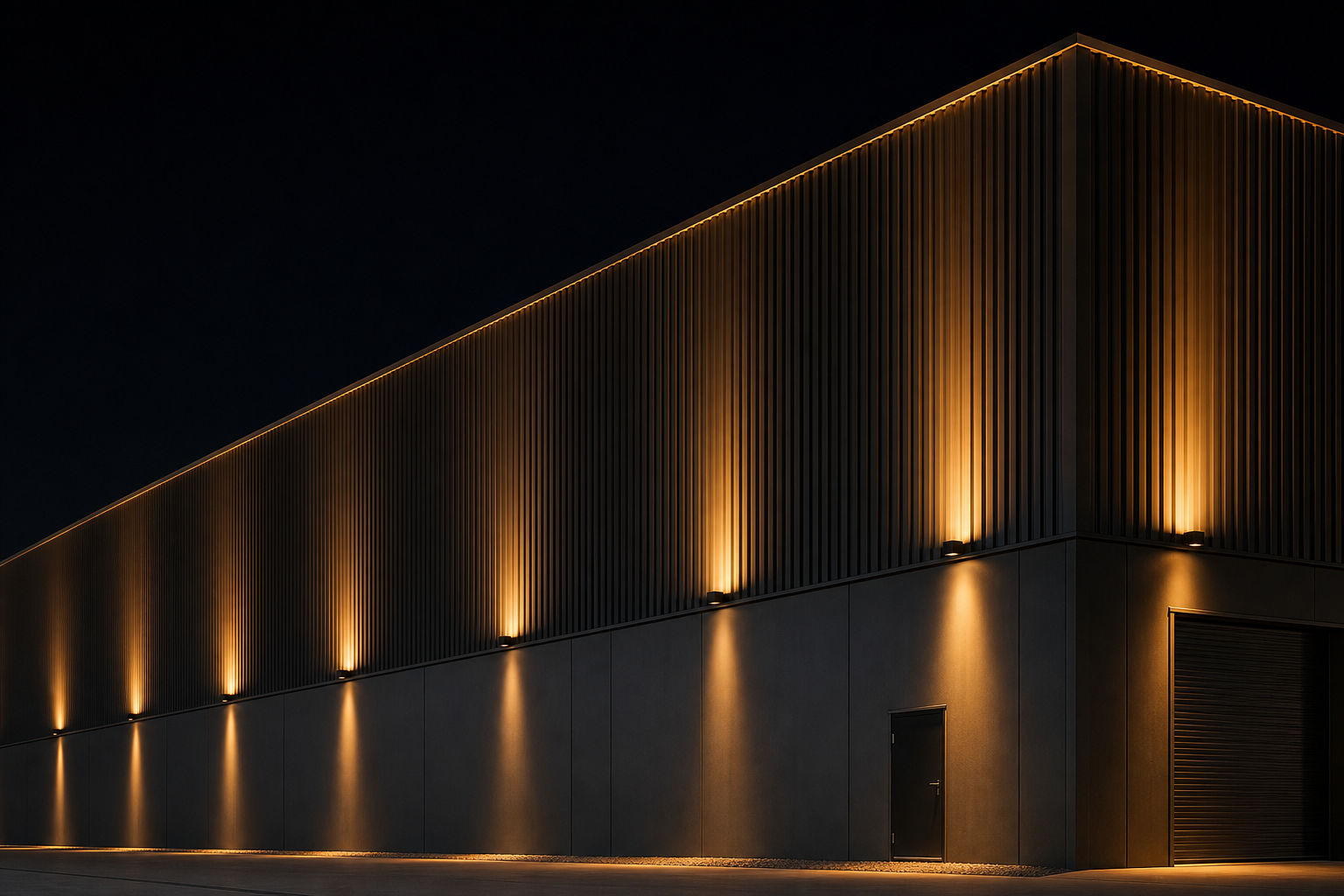
The pendant is the jewelry; the safety and composition layers live around it. Sconces flanking the door put light on faces and keys at eye level, step and path lights keep the walk honest, and soft washes lift the facade texture behind it all — the full approach is laid out in our landscape and facade program, with solar and off-grid options covered in outdoor and solar. Indoors-outdoors continuity matters too: an entry pendant that echoes the interior chandeliers and pendants family, or a piece from the same pendant lights line, makes the threshold feel like one design decision rather than two.
Send the entry dimensions, door height and exposure — covered, open-sided, coastal — and we will return rated, correctly sized pendant options with FOB pricing within 24 hours.