2026-09-30 · 9 min read · Table Lamps · Buying Guide
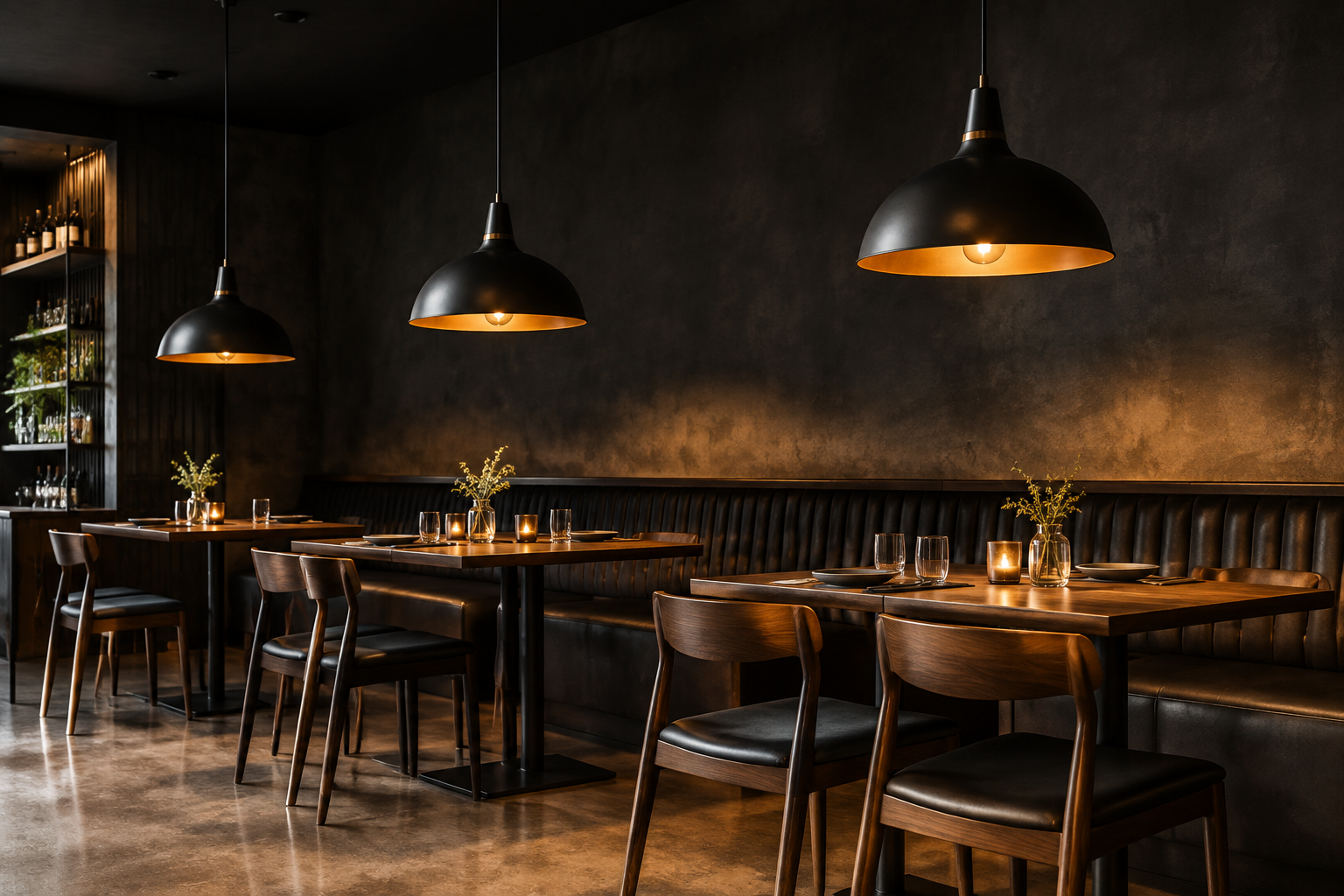
For a century, the table lamp's position was decided by the building: the cord reached the outlet, or the table sat elsewhere. The rechargeable cordless table lamp ended that constraint — a battery, an LED source and a charging dock packed into a lamp-sized body, free to live on any table, windowsill, terrace or bar top that wants it. The format's commercial rise tracks the hospitality world's discovery that low-level table light is the cheapest atmosphere money can buy: restaurants replaced candles with rechargeable lamps for safety and maintenance reasons, and residential buyers followed the aesthetic home. Search volumes for the category now sit among the highest in the table lamp family, and buyer questions concentrate where they should — on battery honesty, runtime and charging logistics. This guide covers all three, plus the specification details that decide whether a cordless program delights or generates returns.
Where cordless table lamps earn their keep
The professional market discovered this category first, for structural reasons. Restaurants and cafes want warm low-level light on every table — the ambience that makes evenings feel expensive — but hardwiring forty tables is fantasy, and open flames bring fire risk, wax maintenance, and wind. The rechargeable lamp solves all three: full tables covered, no cords crossing service routes, no flames on terraces, and staff carrying lamps inside at close instead of scraping wax. Terrace and garden dining extends the case outdoors, where no outlet has ever existed. Hotels apply the same logic to breakfast rooms, pool decks, rooftop bars and event banquets, where our hospitality lighting programs now treat cordless table lamps as standard inventory rather than an experiment.
The residential market adopts the same product for softer reasons: reading corners that lack outlets, windowsill dinners, balcony evenings, picnic and camping tables, and the plain freedom of rearranging a room without hunting for sockets. A useful mental model divides the market by where the lamp sleeps: lamps that sleep on a charging dock in the same restaurant nightly are working products; lamps that wander a home and get charged occasionally are convenience products. The specification differs — working products need runtime sized to a full service and docks that charge multiple units; convenience products can trade runtime for design and price. Both live in the broader decorative lighting assortment, and both are why the category's growth has outpaced its product quality — which is exactly why the next section matters.
Battery and charging: reading the spec honestly
Battery specifications are where cordless lamp marketing goes vague, so a buyer should translate three claims. Capacity: quoted in milliamp-hours, meaningless until divided by the lamp's draw — the honest figure is runtime, not capacity, and a milliamp-hour number without a runtime-per-brightness statement describes the cell, not the product. Runtime: published figures for the category commonly span from roughly eight to forty or more hours depending on brightness setting and lamp size (illustrative market range) — always per setting. A lamp quoted "up to 40 hours" is usually quoting its lowest mode; ask for runtime at full output and at a realistic mid setting, because a dinner service runs lamps at mid-to-high for four to six hours (illustrative), and the spec that matters is whether one charge covers one service with margin. Chemistry and cycle life: lithium iron phosphate (LiFePO4) cells cost marginally more, tolerate heat and cold better, and deliver more charge cycles before capacity fades than ordinary lithium-ion — a meaningful difference for a restaurant charging its lamps daily, where cycle life is the product's real lifespan.
Charging is the second half of the honest conversation. USB-C charging has become the sensible standard — universal cables, power banks as emergency chargers, one spare cable type across a fleet. Multi-unit charging docks turn charging from a cable exercise into a parking ritual: staff return lamps to the dock at close, and the fleet is full by open; docks also solve the accounting problem, since a lamp without a dock is a lamp that quietly never charges. Charge time belongs in the spec too — overnight charging suits every program, while rapid-charge claims matter mainly to venues turning lamps between lunch and dinner services. Qualitatively: a lamp charged daily ages predictably, capacity fading over years of cycles; programs that plan for gentle charging habits and occasional cell service get long lives from their fleets.
Output, dimming and colour temperature
A cordless table lamp is an intimacy instrument, and its light specification should be read that way. Output lives far below household lighting levels — the category works in the low hundreds of lumens at most, with many hospitality models lower still (illustrative), because the lamp's job is a pool of warm light on a tabletop, not room illumination. Dimming is the feature that makes one lamp serve the whole evening: stepless touch dimming or multi-step touch controls let a restaurant run lamps bright during setup, mid through dinner and low for dessert, and let a homeowner drop the same lamp to a candle register after midnight. Touch interfaces on the shade or base have become the interaction standard, largely because they survive splashes and sticky fingers better than small mechanical switches.
Colour temperature is the emotional half of the spec. Warm white around 2700K is the household and cafe default (the 3000K trade-off is covered in our comparison guide), while hospitality-focused models push warmer — into the 2200K to 2400K range that mimics candlelight (illustrative) — because table-level light reads most flattering when it is amber. Fixed-warm models keep the price down and the experience consistent; tunable models add a bright cool mode for daytime service, cleaning and tasks, which some venues value and others never touch. One boundary note for outdoor use: splash resistance — an IP44-class rating — protects lamps on terraces from rain and spills, with the rating system explained in our IP rating guide; fully exposed, weather-facing positions want higher, and no cordless table lamp is a substitute for a rated exterior fixture.
Rechargeable vs wired vs candle: comparison
| Dimension | Rechargeable cordless lamp | Wired table lamp | Candle |
|---|---|---|---|
| Placement freedom | Any surface, indoors or sheltered outdoors | Bound to outlets and cord routes | Any surface, wind permitting |
| Runtime | Hours per charge; needs a charging routine | Unlimited while plugged in | Hours per candle; consumable |
| Dimming | Touch step or stepless dimming built in | Depends on dimmer and bulb compatibility | Fixed; burned down over the evening |
| Safety | Cool LED, no flame; battery quality varies by maker | Cord trip and knock risks at table level | Open flame; wax, smoke and wind |
| Running cost | Cents of electricity per charge (illustrative) | Small continuous consumption | Continuous consumable spend |
| Maintenance | Charge cycles; cell service after years | Bulb replacement | Wax cleaning, flame management |
| Relative cost (illustrative) | Premium over basic wired lamps; battery and dock hardware | Entry to premium by design | Low per unit; ongoing consumable |
| Natural fit | Restaurants, terraces, events, outlet-free corners | Permanent bedside and desk positions | Traditional tables, short ceremonial use |
Specifying cordless lamps for hospitality and retail programs
For a restaurant group or hotel purchasing dozens of units, the product decision is really a fleet decision, and four specifications dominate. Fleet arithmetic: units per table times service hours versus runtime at realistic brightness — order for one charge to cover the longest service with margin, and include a shelf of charged spares for the lamps that wander off with a guest (it happens, priced into the program). Docks and workflow: multi-unit docks sized to the fleet, positioned where closing staff already pass, with USB-C as the cable standard across the fleet. Durability: a stable weighted base that survives table knocks, splash-proofing at least to IP44 class for terrace duty, and finishes that tolerate daily handling and cleaning chemicals. Paper: battery certification for the destination market — the battery is the risk item in this category, and documentation travels with the shipment under our certification process, with OEM customization of finishes, logos and packaging handled through our OEM/ODM program.
Retailers building the category for consumers face a simpler version of the same list — honest runtime labeling per brightness mode, dock included or clearly optional, and warm light that photographs the way it looks. The category's returns come overwhelmingly from surprise: runtime shorter than imagined, chargers not included, light colder than pictured. Specify against those three surprises and the cordless lamp becomes what the restaurant world already knows it to be — the highest-ambience-per-euro product on the table. Send the fleet size, service hours and destination market, and we return options with runtime curves, dock configurations and certificates within 24 hours via get a quote.