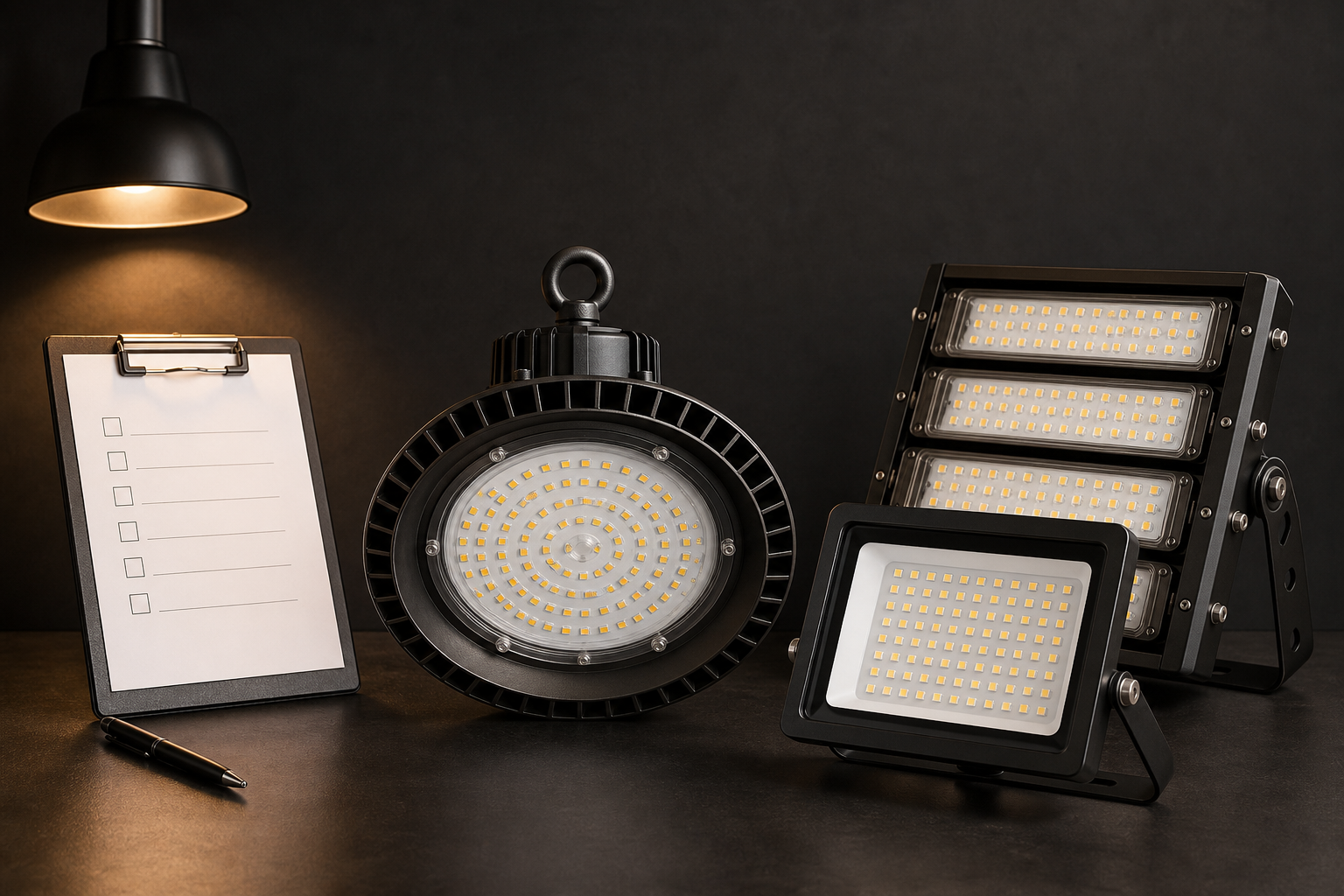
Almost every sourcing disaster is a verification failure that happened weeks before the wire transfer. Here is the evidence checklist that prevents it.
2026-09-10 · 8 min read · Sourcing guide
Read a dozen sourcing-failure stories — a container of non-compliant fixtures, a deposit paid to a shell, certificates that evaporate at customs — and the same pattern appears: the buyer verified the price, the photos and the politeness, and never verified the facts. Which company legally receives the money, whether production actually happens at that address, whether the certificate in the brochure exists in an official database, whether the sample that was tested is the sample that ships. None of these checks is difficult. All of them must happen before the deposit, because after the deposit your leverage is a refund promise from the party you failed to check.
AURELUX does this verification as its core work — a cluster sourcing partner vetting workshops across the Guzhen cluster and the wider Pearl River Delta. This guide is the checklist we run, written so a buyer can run it alone.
Start with the legal person, not the brand. The business license states the registered company name, unified social credit code, registered capital and business scope; the name on the license must match the name on the quotation, the proforma invoice and the bank account receiving your deposit — a mismatch between quoted brand and receiving entity is the single most common red flag. Note the scope wording: it should plausibly cover manufacture or export of lighting products. Then establish the commercial reality: manufacturer, trading company or hybrid. All three can be fine suppliers, but each fails differently — a manufacturer fails on capacity and consistency, a trader fails on technical depth, a "factory" with no factory fails on everything. Ask directly, then test the answer: request a live video walk of the production floor at an unannounced time, or commission a third-party audit visit (SGS, TUV, Intertek and Bureau Veritas all operate factory audit services in Guangdong — named here as examples of public lab brands, not endorsements).
Capability claims are cheap; documents tied to your model are not. Ask for quality-system evidence (partner factories operating under ISO 9001), product test reports against the standards your market requires — EN 60598-series safety reports for Europe-bound luminaires, photometric reports for the exact SKU — and whether reports come from an accredited lab or were typed in an office. The decisive move is the third-party sample test: send the sample you received, not one the supplier chooses, to an independent lab for the two or three tests that matter for your market. The cost is trivial against a container, and it converts "our factory is reliable" into a measurement.
Every destination certification worth claiming is worth verifying in the issuer's own database. Certificate PDFs and images prove nothing; numbers resolve or they do not.
| Claim | Where to verify | What to check |
|---|---|---|
| EU energy label & EPREL | Official EPREL public database (European Commission) | The exact model is registered before it is offered for sale in the EU. |
| Saudi conformity | SABER platform (Saudi authorities) | Product certificate is valid and issued for the model and importer. |
| CB scheme test certificates | IECEE certificate search | CB certificate exists for the product category and standard cited. |
| DLC listing (North America) | QPL at designlights.org | The exact model appears on the Qualified Products List, not a near-name. |
| Brazil INMETRO | INMETRO / accredited OCP records | Certification exists for the product and is within its validity. |
| CE self-declaration | Supplier's Declaration of Conformity | DoC lists correct directives, standards, model and an EU contact address. |
Databases change their addresses over time; ask the supplier for the verification link and treat a refusal to provide one as an answer.
Verification only protects you if the payment structure gives it teeth. The working structure for export lighting is T/T 30% deposit + 70% against B/L copy, with L/C at sight for bulk orders (illustrative working terms); a supplier demanding 100% advance is asking you to fund all the verification risk you skipped. Attach conditions to the balance: pre-shipment inspection passed to an agreed AQL standard, certificate numbers confirmed for this production batch, and a pack list that matches the approved sample BOM. Keep quotations' validity in writing — 30 days is the norm — and put lead time, warranty coverage and spares policy (a 1-3% spares line per program is the working norm; illustrative) into the proforma, not the chat history. For small trial orders of 100-200 pcs, the cluster's market-procurement channel (customs code 1039) keeps compliance clean without general-trade overhead.
| # | Evidence to collect | How to verify | Kill signal |
|---|---|---|---|
| 1 | Business license copy | Company name, credit code, scope; match the receiving bank account name | Brand name differs from licensed entity |
| 2 | Production proof | Unannounced live video walk or third-party audit | "Cameras not allowed today" |
| 3 | Test reports for your model | EN 60598-series / photometry from an accredited lab | Reports with no lab identity or wrong model |
| 4 | Independent sample test | You send the sample to the lab yourself | Supplier insists on couriering "their" sample |
| 5 | Certificate numbers | Resolve in EPREL / SABER / IECEE / QPL / INMETRO as applicable | Images without resolvable numbers |
| 6 | Trade references | Two buyers in your region you can contact | References in a different product category |
| 7 | Payment structure | T/T 30/70 or L/C at sight; balance after inspection (illustrative) | 100% advance demanded |
| 8 | Written commercial terms | Lead time, warranty coverage, spares, packing in the proforma | "We always do it by chat" |
Run seriously, the checklist costs days and a few hundred dollars in audit and lab fees — against a deposit that is typically thousands and a program worth tens of thousands. The checks also rank: identity (1, 2, 7) is non-negotiable for any first order; capability (3, 4) matters most for technical lines; compliance (5) is decisive for regulated destinations like the EU and Saudi. Repeat orders relax the checks; first orders never should.
Pair this with the question list in 20 questions to ask a lighting manufacturer, the on-the-ground context in our Guzhen field guide, and the compliance maps on our certifications page. The terms layer is summarized on our wholesale terms page, and OEM/ODM specifics on the OEM/ODM page.
The question list grouped by capability, quality, compliance and commercial terms.
Mixed-SKU lighting shipments done right — the last verification gate before the port.
IP65 vs IP66 vs IP67 — the spec most often claimed and least often tested.
How professional buyers work the lighting capital — districts, audits and export routes.
Send the item list — sourcing through evaluated partner factories with per-order certificate verification and inspection before the balance.